Claude Opus 4.8 for SEA Teams: The Real MYR Cost Math
Should SEA teams switch to Claude Opus 4.8? The real MYR API cost, smart-routing economics for a KL SME, and when Sonnet 4.6 or Haiku 4.5 still wins.
Last verified: 2026-05-31. Anthropic pricing and feature data sourced from the Opus 4.8 announcement, system card, and Claude API pricing page. GPT-5.5 pricing from OpenAI's pricing page. Models and prices move fast — check the linked sources before you budget.
By 4lvin · Founder, Mindber. Tracks 500+ AI/SaaS tools across SEA markets via the Mindber Innovation Index methodology, covering MY/SG/ID/PH/TH cost and compliance contexts.
How we assessed this: This is AI-assisted editorial analysis of public sources — Anthropic's Opus 4.8 announcement and system card, the Claude API pricing page, OpenAI's pricing page, and the Mindber product index — as of 2026-05-31. It is not hands-on product testing. Every dollar figure and benchmark score is sourced from a primary vendor page and cited inline. The MYR figures use an illustrative RM 4.45 / USD rate; the cost calculator below lets you set your own. Capability scores follow the Mindber Innovation Index rubric (1–3 limited, 4–6 partial, 7–8 strong, 9–10 leading), not vendor marketing.
Is Claude Opus 4.7 already obsolete? That is the actual question behind every "should we upgrade" thread since Anthropic shipped Opus 4.8 on 28 May 2026. For a Kuala Lumpur SME paying in ringgit, the upgrade decision is not about the leaderboard — it is about whether the same monthly invoice now buys materially better work, and where the model belongs in a stack that also runs Sonnet 4.6 and Haiku 4.5.
The short version: Opus 4.7 is not dead, but it is no longer the model you reach for first. Opus 4.8 lands at the same headline price — $5 per million input tokens and $25 per million output, unchanged from 4.7 — while scoring higher on coding and agentic work. A free quality bump at a flat price is rare. The trap is assuming "better model, same price" means "put everything on Opus." For most SEA workloads it does not, and the MYR math below shows why.
This piece is written for founders, ops leads, and engineering managers in Southeast Asia who already pay for Claude or a competitor and want a switch / no-switch answer in ringgit terms. For the broader field, see the Mindber rankings page, the LLM category, and our AI software comparisons hub.
Quick answer: should SEA teams switch to Opus 4.8?
Yes — switch the Opus slice of your workload from 4.7 to 4.8, because it is a config-only change at the same price with measurably better output. No — do not move more work onto Opus because of the upgrade. The ringgit-rational pattern for a SEA team is to keep Opus 4.8 as the reasoning and orchestration brain, run Sonnet 4.6 as the price/quality workhorse, and push classification and extraction down to Haiku 4.5. The model got better; the routing discipline that makes Claude affordable in MYR did not change.
On documented data as of 2026-05-31: Opus 4.8 is a same-price successor to 4.7, so the migration risk is low and the upside is real. The cost risk lives entirely in how much work you route to it, not in the per-token rate.
What actually changed (the operational shifts, not the leaderboard)
Benchmark deltas make headlines; operational changes decide budgets. Four shifts in Opus 4.8 matter to a SEA team running real workloads, and only one of them is a benchmark number.
Opus 4.8 — the numbers that anchor the decision
1. Fast Mode got cheap enough to use. Anthropic priced Opus 4.8 Fast Mode at $10 input / $50 output per million tokens, running at 2.5× speed and three times cheaper than the previous Fast tier. For a customer-facing agent where a four-second reply loses the chat, that price drop changes the calculation. Fast Mode was a luxury line item on 4.7; on 4.8 it is a defensible choice for interactive flows that genuinely need Opus reasoning.
2. Dynamic Workflows add scale; multi-model routing adds economics. Dynamic Workflows let Claude Code fan a task out across hundreds of parallel subagents, a research-preview capability on Team, Max, and Enterprise plans. That is a scale primitive — it does not auto-route to cheaper models. The cost saving in the routing math below comes from a separate, app-level architecture choice: building your system so an Opus 4.8 orchestrator dispatches Sonnet 4.6 workers via the Messages API. Dynamic Workflows can run that pattern at scale; the model assignment is yours to set.
3. Mid-task system messages without breaking the cache. The Messages API now accepts system entries inside the messages array, and doing so no longer invalidates the prompt cache. In plain terms: you can correct or re-steer an agent mid-run — "stop, the customer is in Penang, use MYR" — without paying to re-process the whole context. For long agent sessions that is a direct token saving, not a convenience feature.
4. The honesty gains are a procurement argument. Anthropic's Opus 4.8 announcement reports the model is around four times less likely than 4.7 to let flaws in its own code pass without comment. For a team without a large QA function, a model that surfaces its own errors is worth real money in avoided rework. Vision remains the known gap — Anthropic's own materials still position Gemini ahead on some multimodal tasks — so image-heavy pipelines should test before committing.
What probably did not change: the tokenizer. Secondary sources indicate Opus 4.8 shares 4.7's tokenizer, meaning token-per-task should stay closer than the 4.6 → 4.7 move, which carried a token-count inflation of up to ~35% (confirm against Anthropic's tokenizer docs before rebaselining). Rebaseline cache reads after switching: cache hits require identical prompt prefixes, and any prompt edit resets the cached prefix. That is why "switch the Opus slice" is a lower-risk move than the 4.6 → 4.7 jump — but measure, don't assume.
The real cost math (in ringgit)
Here is the part vendors never put on the pricing page: the per-token rate is not your cost. Your cost is rate × volume × cache discipline × FX. A KL SME burning 20 million input and 5 million output tokens a month, with a 60% cache-hit rate, pays very different ringgit depending on which model carries which job. The calculator below runs the live math — drag the sliders to your own volume and set today's FX rate.
Cost formula:
cost = (inputM × (1 − cacheHit) × inRate + inputM × cacheHit × cacheRate + outputM × outRate) × FX— wherecacheRateis approximately 10% of the input rate for Anthropic models. Cache-read economics differ across providers; see footnote below the calculator.
| Model | Use for | RM / mo | $ / mo |
|---|---|---|---|
| ★ DeepSeek V3.2 | cheapest workhorse | RM 11.96 | $2.69 |
| Haiku 4.5 | classify / route / extract | RM 152 | $34.20 |
| Sonnet 4.6 | price/quality sweet spot | RM 457 | $103 |
| Opus 4.8 | best reasoning / orchestrator | RM 761 | $171 |
| GPT-5.5 | competitor frontier | RM 872 | $196 |
| Opus 4.8 Fast | 2.5x speed, latency-sensitive | RM 1,522 | $342 |
All-Opus 4.8: RM 761 ·Opus orchestrator (20%) + Sonnet subagents (80%): RM 517
Routing saves RM 244/mo (32%). Most SEA workloads belong on Sonnet/Haiku — reserve Opus 4.8 for reasoning, orchestration, and code quality.
Cache-rate footnote: The calculator models cache reads at ~90% off the input rate for all models (Anthropic's published rate). GPT-5.5's actual cached input rate is $1.25/M — roughly 25% of its $5/M base, not 10%. At the example volume (12M cached inputs/mo), that difference adds roughly RM 40/mo to the GPT-5.5 figure. Re-run the formula above with
cacheRate = $1.25/Mfor the OpenAI-exact figure (≈ RM 912/mo vs RM 872 shown in the calculator).
Read the bars, not the headline rate. At 20M input / 5M output / 60% cache and RM 4.45 to the dollar, all-Opus 4.8 lands near RM 761 a month. The same workload on Sonnet 4.6 is roughly RM 457 — and on Haiku 4.5, around RM 152. DeepSeek V3.2 sits under RM 12 for the same volume, which is why it remains the cheapest workhorse for non-sensitive bulk jobs. GPT-5.5 lists $5 input / $30 output per million tokens for standard short-context requests, rising to $10 / $45 for long-context (>272K tokens) — pricier than Opus 4.8 on output, cheaper than Opus 4.8 Fast Mode, and landing near RM 872 a month at the example volume per calculator (see footnote for the cache-rate nuance).
The routing verdict in the calculator is the whole argument. Split the work — Opus 4.8 as a 20% orchestrator, Sonnet 4.6 carrying 80% of subagent volume via the Messages API — and the bill drops from RM 761 to about RM 517, a saving near a third of the all-Opus cost. That is not a benchmark trick; it is a standard multi-model routing architecture that the API pricing structure rewards.
Monthly API spend
Cost per reasoning task
Cost per bulk subagent task
Three cautions before you treat these as gospel. The FX rate moves daily, so RM figures need re-checking at budget time. Cache discipline is doing heavy lifting — the ~90% cache-read discount is the difference between an affordable Opus slice and a runaway one, so a team that does not structure prompts for caching will see worse numbers than the bars show. And output tokens dominate the bill at a 5× multiplier over input, which means verbose system prompts are cheap and verbose model output is not.
SEA scenarios: which tier, and why most stay on Sonnet or Haiku
Abstract routing advice is useless without the actual jobs SEA teams run. Below are the three most common ones we see in the Mindber discover feed and reader questions, mapped to the tier that earns its keep.
Three SEA workloads, three correct tiers
Stay on Haiku 4.5
- Classify, tag, and route inbound support in Bahasa Melayu or Mandarin
- Extraction and intent detection do not need Opus-grade reasoning
- Around RM 152/mo at the example volume — the cheapest Claude tier
- Escalate only the hard 5% to a higher tier
Stay on Sonnet 4.6
- Multi-turn customer chat with decent judgement and tone control
- The price/quality sweet spot for most production traffic
- Roughly RM 457/mo at the example volume
- Carries the bulk of subagent work in a routed stack
Move to Opus 4.8
- Multi-step agent planning, hard debugging, contract or financial logic
- Orchestrator that dispatches cheaper Sonnet subagents via API
- Code review where the 4× honesty gain avoids costly rework
- Reserve for the slice that actually needs the reasoning ceiling
Take a Bahasa or Chinese support agent. The work is classification, sentiment, and routing — fast, high-volume, low-reasoning. Haiku 4.5 handles it at roughly RM 152 a month for the example volume, and the only jobs that should escalate are the genuinely ambiguous tickets. Putting that traffic on Opus 4.8 would multiply the bill by five for output quality the customer never perceives.
A WhatsApp CRM bot is the Sonnet 4.6 case. It needs multi-turn memory, tone control, and reasonable judgement about when to hand off to a human — but not frontier reasoning. Sonnet sits at the price/quality middle precisely for this. At the example volume, Sonnet 4.6 runs at roughly RM 457 a month versus RM 761 for Opus — Sonnet costs about 40% less, so paying for Opus here buys reasoning headroom the bot rarely exercises.
Opus 4.8 earns its place where reasoning is the product: an agent that plans a multi-step workflow, a code-review pass where a missed flaw costs a deployment, a financial or contract-logic task where being wrong is expensive. The Mindber Functionality Score for Opus 4.8 reflects this concentration — leading on reasoning and agentic breadth, indifferent on the high-volume, low-complexity jobs where cheaper tiers already pass. For a full side-by-side, the Mindber compare workflow scores both weekly, and the methodology page documents how the Mindber Innovation Index weights novelty against the Mindber Functionality Score's breadth-and-reliability axis.
Migration checklist: it is a config change, not a project
The good news for anyone already on 4.7: switching the Opus slice to 4.8 is a model-string change, not a re-architecture. Secondary sources indicate the tokenizer is unchanged, so token-per-task counts should stay closer than the 4.6→4.7 jump — but rebaseline cache reads after switching, since cache hits require identical prompt prefixes. Run the checklist below before you flip production.
A config-only upgrade for most teams. Sources: Anthropic Opus 4.8 announcement + Claude API pricing page (2026-05-31).
| Dimension | Step | What to verify |
|---|---|---|
| Swap the model string | Point the Opus calls in your config at the 4.8 model ID. Sonnet and Haiku calls are untouched. | |
| Rebaseline cache reads | Tokenizer likely unchanged 4.7→4.8 (per secondary sources; confirm against Anthropic's tokenizer docs). Cache hits require identical prompt prefixes — any prompt edit resets the cached prefix. Watch your cache-hit metric for the first billing day. | |
| Measure token-per-task | Re-run your top 5 task templates and compare tokens-in / tokens-out against the 4.7 baseline. Expect parity; flag any drift above a few percent. | |
| Decide on Fast Mode | For latency-sensitive interactive flows, price the $10 / $50 Fast tier against standard Opus. Only switch flows where speed changes the outcome. | |
| Re-check the routing split | Confirm your app routes subagent API calls to Sonnet 4.6, not Opus. This is an app-level model-selection decision, separate from Dynamic Workflows. The bill is won or lost here. | |
| Re-verify FX and pricing | Pull today's MYR/USD rate and the live pricing page into your budget model. Rates and FX both move. |
If your token-per-task numbers come back at parity and your cache-hit rate holds, the migration is finished. There is no prompt-rewriting phase the way the 4.6 → 4.7 move demanded. Teams that built a data-sensitivity routing policy for PDPA reasons already have the muscle for tier routing — the same control plane that decides "this stays local" can decide "this goes to Sonnet."
The verdict: Opus 4.8 vs Sonnet 4.6 vs GPT-5.5
Scored on the four axes a SEA buyer actually weighs — cost in MYR, reasoning ceiling, agentic capability, and overall value for typical traffic. These are editorial assessments under the Mindber Innovation Index rubric, not benchmarks.
How we score: Scores reflect documented capabilities, vendor-published benchmarks, and pricing as of 2026-05-31 — not hands-on product testing. Rubric: 1–3 limited/absent, 4–6 partial/inconsistent, 7–8 strong/production-ready, 9–10 leading. The Mindber Innovation Index weights novelty and technical differentiation; the Mindber Functionality Score weights breadth and reliability of core capabilities. "Cost" scores higher when the model is cheaper for typical SEA traffic.
Subjective 0–100 scoring across four buyer axes. Higher cost-score = cheaper for typical SEA traffic. Not a benchmark.
Editorial scores under the Mindber Innovation Index rubric. Anthropic pricing per Claude API pricing page; GPT-5.5 pricing per OpenAI pricing page (2026-05-31).
| Dimension | Opus 4.8 | Sonnet 4.6 | GPT-5.5 |
|---|---|---|---|
| Cost (MYR, typical SEA traffic) | Higher input+output — $5/$25 (Claude API pricing, 2026-05-31) | Best value — $3/$15 (Claude API pricing, 2026-05-31) | $5/$30 standard; $10/$45 long-ctx (>272K) (OpenAI pricing, 2026-05-31) |
| Reasoning ceiling | Leading — 88.6% SWE-bench, 1890 GDPval-AA (per Anthropic's system card) (Opus 4.8 system card, 2026-05-31) | Strong, a tier below Opus | Strong frontier; tops some, trails Opus on most per vendor reporting |
| Agentic / orchestration | Leading — Dynamic Workflows (Claude Code scale primitive) + mid-task steering | Capable subagent workhorse | Capable; ecosystem differs |
| Best role for a SEA SME | Reasoning + orchestrator slice only | Default production workhorse | Use only if already standardised on it |
The table makes the switch decision concrete. Opus 4.8 wins reasoning and agentic outright and ties nobody on cost — it is the brain, not the body. Sonnet 4.6 wins value for typical SEA traffic and should carry most volume. GPT-5.5 is a credible frontier model that tops Opus on a minority of benchmarks while trailing on most per vendor reporting — pricier than standard Opus 4.8 on output but cheaper than Opus 4.8 Fast Mode — and earns a slot mainly for teams already standardised on OpenAI.
CTA: compare the live numbers before you commit
Editorial scores are the starting point; live data is the decision. The Mindber compare workflow scores Opus 4.8, Sonnet 4.6, and GPT-5.5 weekly with refreshed pricing and capability data, and the rankings page tracks where each model sits across the LLM category. Run your real token volume through the calculator above, pull today's FX, and route accordingly.
Where to dig deeper:
- Mindber compare — Opus 4.8 vs Sonnet 4.6 — live ranking data, refreshed weekly
- LLM category rankings — every frontier model scored
- PDPA & PDPC procurement guide — data-sensitivity routing for SEA teams
- Manus vs Claude Cowork (2026) — the agent layer that runs on these models
- Mindber scoring methodology — how the Innovation Index and Functionality Score are weighted
Frequently asked questions
Is Claude Opus 4.7 obsolete now that 4.8 is out?
Not obsolete, but superseded for new work. Opus 4.8 launched at the same headline price as 4.7 — $5 per million input tokens and $25 per million output — with higher coding and agentic scores, so there is little reason to start new projects on 4.7. Existing 4.7 deployments keep working; the migration to 4.8 is effectively a config change — secondary sources indicate the tokenizer is unchanged, though a primary-source confirmation was not available at time of writing.
Does switching from Opus 4.7 to 4.8 cost more in tokens?
Unlikely significantly. Secondary sources indicate the tokenizer is unchanged between 4.7 and 4.8, so token-per-task should stay closer than the 4.6→4.7 move — which could increase usage by up to 35% — though this is not yet confirmed against Anthropic's primary tokenizer documentation. Rebaseline cache reads after switching: cache hits require identical prompt prefixes. Measure your top task templates and flag any drift above a few percent.
What does Claude Opus 4.8 cost per month for a KL SME?
At 20 million input and 5 million output tokens a month with a 60% cache-hit rate and RM 4.45 to the dollar, all-Opus 4.8 lands near RM 761 a month. Routing reasoning to Opus and bulk subagent work to Sonnet 4.6 cuts that to roughly RM 517 — about a third lower. Use the calculator above with your own volume and FX rate, since both move.
Should our WhatsApp support bot run on Opus 4.8?
Usually no. A WhatsApp CRM bot needs multi-turn memory and tone control, which Sonnet 4.6 handles at roughly RM 457 a month for the example volume — 40% below Opus at RM 761. Reserve Opus 4.8 for reasoning, orchestration, and code-quality tasks where the reasoning ceiling changes the outcome.
Is Opus 4.8 Fast Mode worth it?
For latency-sensitive interactive flows, often yes. Fast Mode is priced at $10 input / $50 output per million tokens at 2.5× speed, three times cheaper than the previous Fast tier. That makes it defensible for customer-facing agents where a slow reply loses the conversation. For batch or background work where speed does not change the outcome, standard Opus is cheaper.
What are Dynamic Workflows and why do they affect cost?
Dynamic Workflows let Claude Code run hundreds of parallel subagents — a research-preview scale primitive on Team, Max, and Enterprise plans. They are a scale feature, not an automatic cost-router: Dynamic Workflows do not assign models to subagents. The one-third saving in the calculator comes from a separate app-level decision — calling Sonnet 4.6 for the bulk of subagent work via the Messages API, and reserving Opus 4.8 for orchestration and reasoning steps. Dynamic Workflows can run that architecture at scale; the model assignments are yours to set in code.
How does Opus 4.8 compare to GPT-5.5 on price?
On standard short-context requests, GPT-5.5 lists $5 input / $30 output per million tokens — the same input rate as Opus 4.8, but $5 higher on output ($30 vs $25). Long-context requests (>272K tokens) rise to $10 input / $45 output. GPT-5.5 tops Opus on a minority of benchmarks but trails on most per vendor reporting. For a SEA team, standard Opus 4.8 is cheaper on output and leads on most published benchmarks — it is the better-value choice unless you are already standardised on OpenAI's ecosystem.
Is Opus 4.8 good for Bahasa Melayu and Chinese workloads?
For reasoning-heavy tasks in those languages, yes — but most multilingual support work does not need Opus. Bahasa and Chinese ticket triage, tagging, and extraction run well on Haiku 4.5 at a fraction of the cost. Use Opus only when the task requires genuine reasoning in the target language, such as multi-step analysis or nuanced drafting.
Does Opus 4.8 fix the vision gap versus Gemini?
Not entirely. Anthropic's own materials still position Gemini ahead on some multimodal and vision tasks. Opus 4.8's gains are concentrated in coding, agentic work, and honesty. If your pipeline is image-heavy — document OCR, chart reading, screenshot analysis — test Opus 4.8 against a Gemini baseline on your own data before committing.
Where can I see live ranking and pricing data for these models?
Use the Mindber rankings page for weekly capability scores and the compare workflow for side-by-side pricing and capability data. The LLM category scopes rankings to frontier models, and the data sources page lists the feeds behind every figure.
Sources & methodology
Sources & methodology
This article cites primary sources for every benchmark, price, and feature claim. MYR figures are illustrative (RM 4.45/USD) and computed by the embedded calculator; capability scores follow the Mindber Innovation Index rubric and are editorial, not benchmarks. Audit trail as of 2026-05-31.
- [1]Opus 4.8 launched 28 May 2026; Fast Mode $10/$50 at 2.5× speed (3× cheaper than prior Fast tier); Dynamic Workflows = scale primitive in Claude Code, research preview, Team/Max/Enterprise; mid-task system messages preserve cache; 4× fewer unflagged code flawsAnthropic — Introducing Claude Opus 4.8 — 2026-05-31
- [2]Tokenizer reportedly unchanged 4.7→4.8 (per secondary reporting; not confirmed against Anthropic's primary tokenizer documentation)Secondary reporting; primary confirmation not available at time of writing — 2026-05-31
- [3]SWE-bench Verified 88.6%; GDPval-AA 1890 Elo (leading) — cited by secondary sources as system-card figures; primary PDF not fetched verbatim at time of writingAnthropic — Claude Opus 4.8 system card — 2026-05-31
- [4]Opus 4.8 $5/$25, Sonnet 4.6 $3/$15, Haiku 4.5 $1/$5 per million tokens; cache read ~90% offClaude API pricing page — 2026-05-31
- [5]GPT-5.5 $5/$30 standard short-ctx; cached input $1.25/M; long-ctx >272K = $10/$45OpenAI pricing page — 2026-05-31
- [6]DeepSeek V3.2 $0.14/$0.28 per million tokensOperator-supplied competitive context; rate self-reported by vendor — 2026-05-31
- [7]MYR cost figures (RM 761 all-Opus / RM 517 routed / per-tier monthly)Mindber illustrative model — vendor rates × example volume × RM 4.45 FX. Not metered. Re-run with your own inputs. — 2026-05-31
- [8]Buyer-axis capability scores (cost / reasoning / agentic / value)Mindber editorial rubric — subjective 0–100 scoring of documented capabilities and published benchmarks. Not a benchmark. — 2026-05-31
- [9]PDPA / cross-border data routing context for SEA teamsMY PDPA + SG PDPC general guidance, not legal advice — 2026-05-31
Keep reading
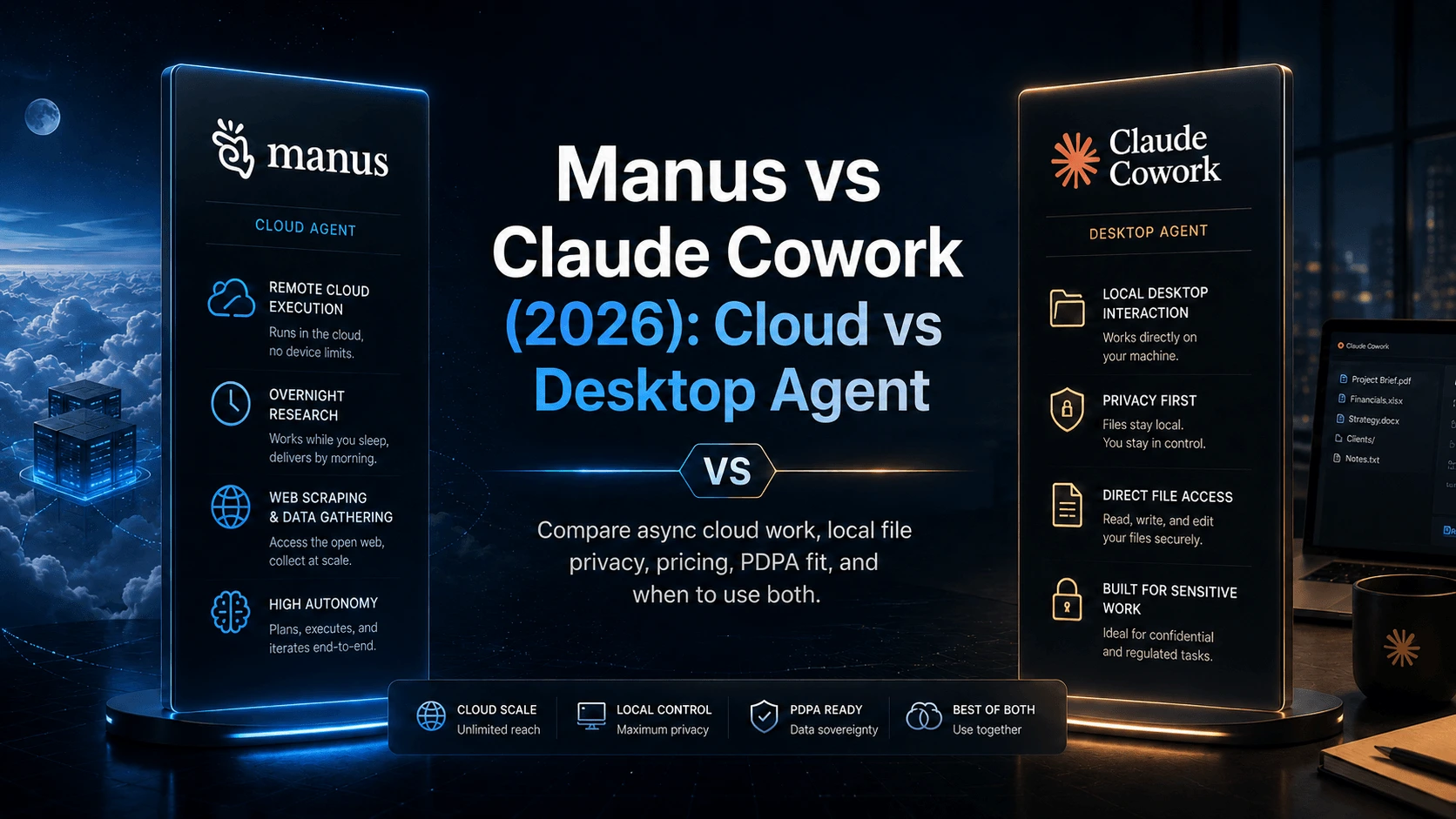
Manus vs Claude Cowork (2026): Cloud vs Desktop Agent
The agent layer that runs on top of models like Opus 4.8 — cloud async vs local-first, with the PDPA fit for SEA teams.
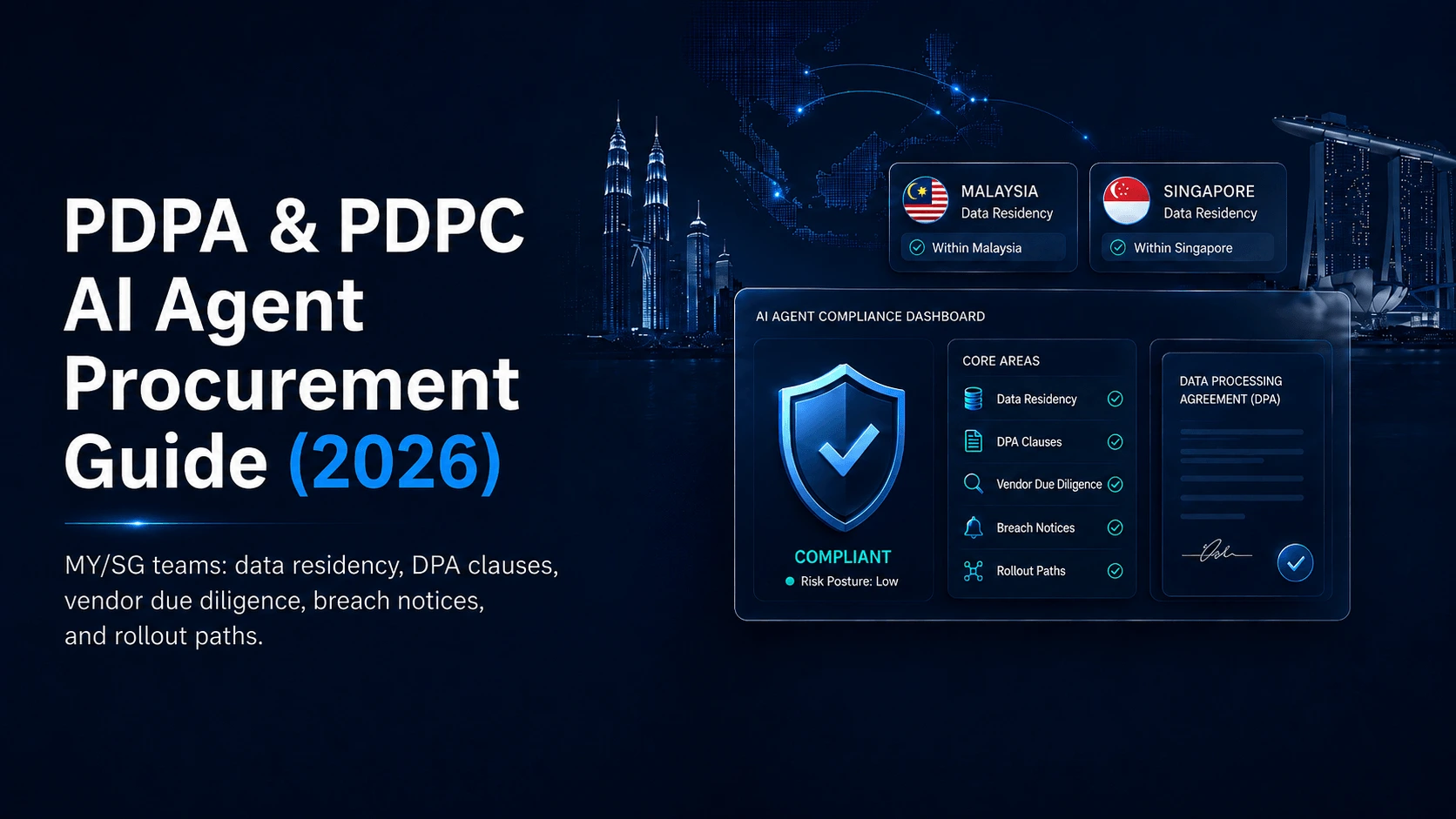
PDPA & PDPC AI Agent Procurement Guide (2026)
How MY/SG teams route work by data sensitivity — the same control plane that decides model tiers.
Legal notice
This publication constitutes editorial commentary on publicly available information and does not constitute financial, legal, investment, or professional advice. Product names, trademarks, and registered trademarks referenced herein are the property of their respective owners; their appearance does not imply endorsement or affiliation. Mindber's analysis reflects editorial judgment based on public signals and is subject to change without notice. Scores are not buy, sell, or hold recommendations. No commercial relationship exists between Mindber and the vendors evaluated unless separately disclosed in writing. This publication is governed by the laws of Malaysia. Any dispute arising from or in connection with this publication shall be submitted to the exclusive jurisdiction of the courts of Malaysia.
AI-generated · This report was generated using AI language models trained on publicly available data. It reflects editorial analysis at the time of generation and is not the result of hands-on product testing, independent verification by a human analyst, or a commercial endorsement. All scores, assessments, and claims are derived from signals indexed by Mindber at generation time and are subject to change without notice. Mindber and its operators make no warranty of accuracy, completeness, or fitness for any commercial decision-making purpose. This report is for informational purposes only.
